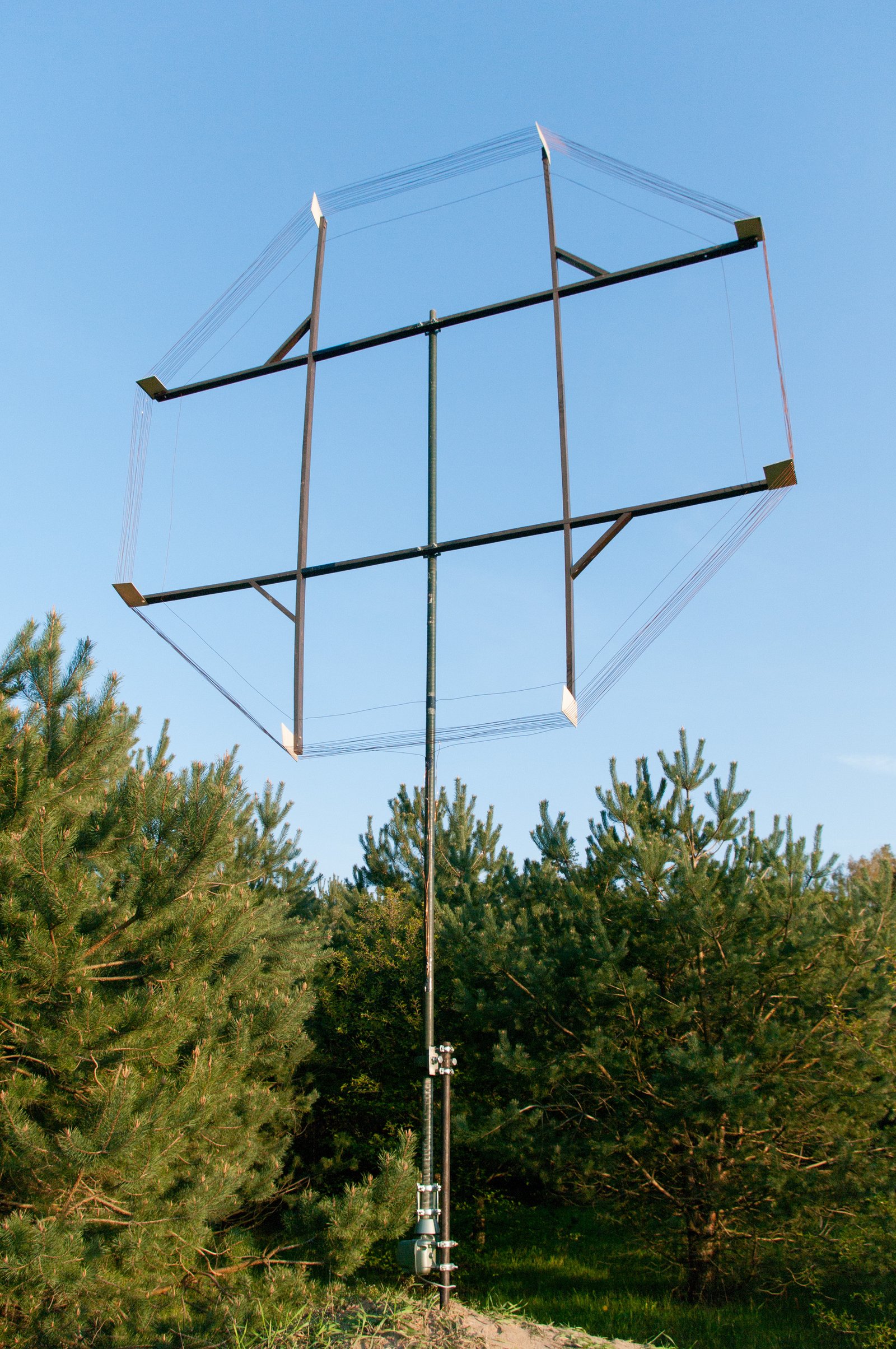
Receiving Mode-S and ADS-B signals at 1090 MHz requires millimeter precision. The Coaxial Collinear (CoCo) antenna is the ideal cost-performance balance for L-band feeders.
📡 Specifiche Hardware & Parametri RF
RF Architecture and Velocity Factor
The core of the CoCo antenna is the Velocity Factor (VF) calculation. For RG-6 (typical VF 0.82) or RG-213 (VF 0.66), the length of each 1/2 wave segment must be calculated as: L = (c / f) * VF / 2. A few millimeters error shifts resonance out of band, degrading the Signal-to-Noise Ratio (SNR).
Bandpass Filters: Cavity vs SAW
In urban environments, LTE/5G interference is critical. SAW filters are compact and cheap, but cavity filters offer superior selectivity and lower insertion loss, essential for maintaining a low system Noise Figure (NF).
LNA Preamplifiers and Bias-Tee
Using an LNA near the antenna, powered via Bias-Tee, compensates for feedline losses. Avoid saturating the SDR; a total gain of 15-20 dB is usually sufficient.
| Parameter / Component | Optimal Value / Description |
|---|---|
| Impedance | 50 Ohm |
| Downlead Cable | LMR-400 or RG-213 |
| Connectors | N-Type (weatherproofed) |
Monitor your performance at map.adsbitalia.it and learn more at adsbitalia.it/it/feeding.html.