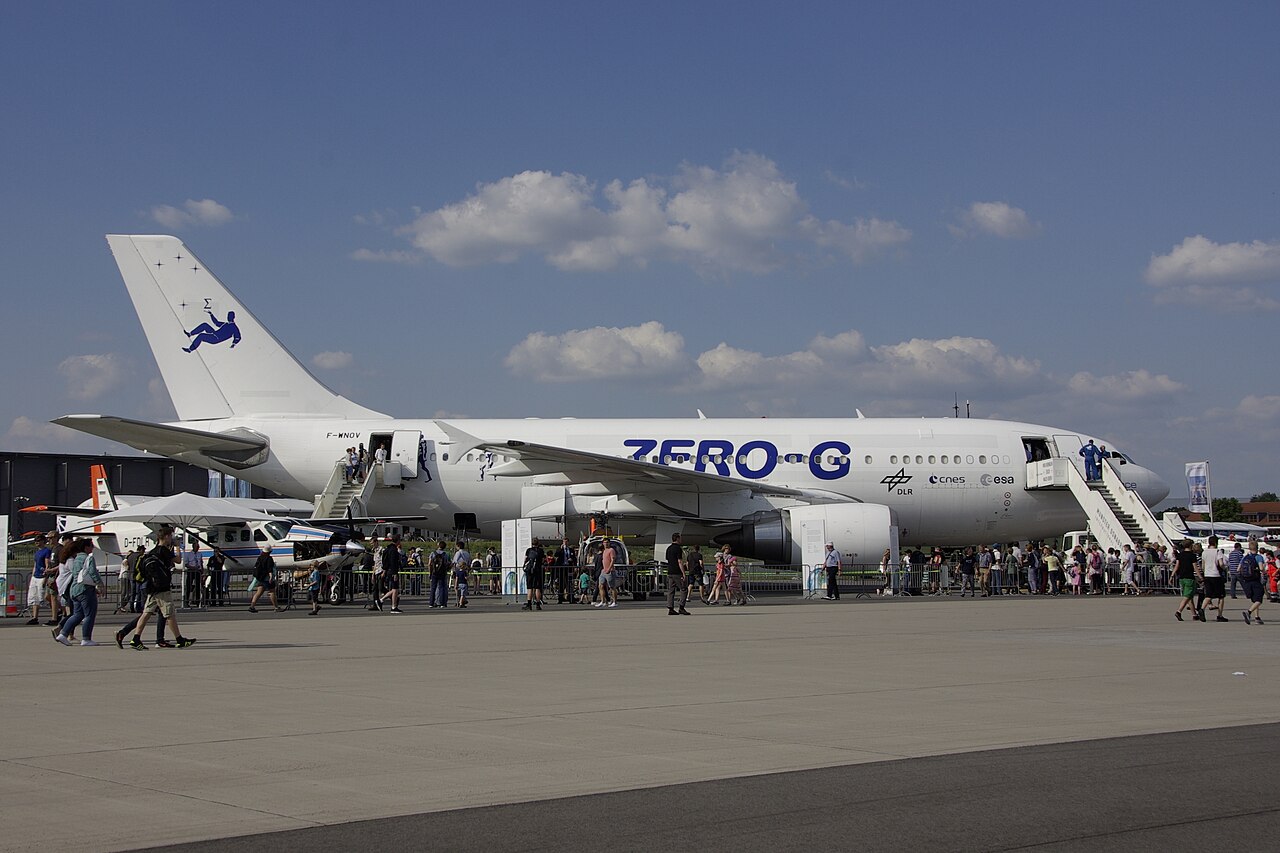
In the vast landscape of scientific aviation, few aircraft embody engineering audacity like the Airbus A310 Zero-G. It is not merely an airliner, but a flying research laboratory that turns physics into a dynamic stage, allowing researchers and astronauts to experience weightlessness in a controlled environment.
✈️ Scheda Tecnica & Prestazioni
History, Birth and Design Philosophy
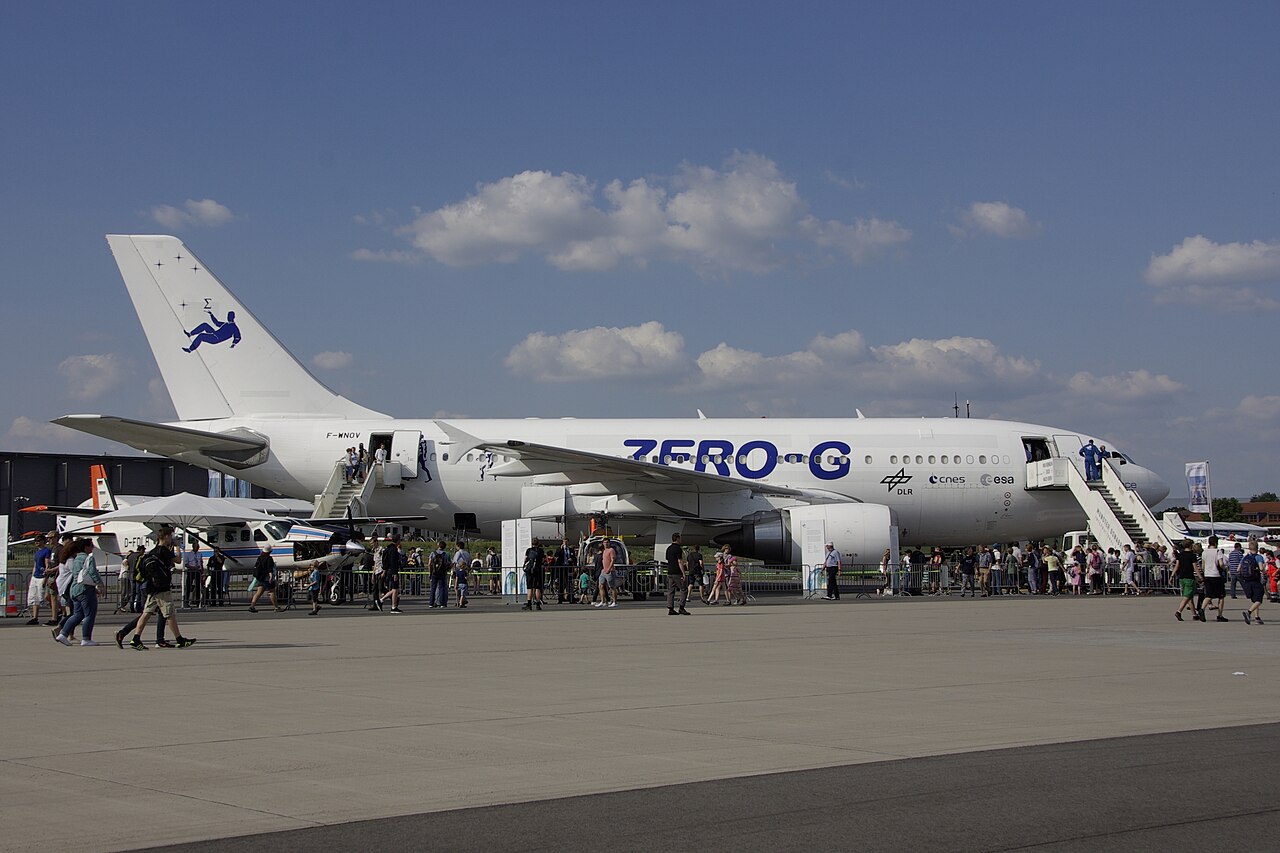
The A310 Zero-G, operated by Novespace on behalf of ESA, was born from the need to bridge the gap between space theory and experimental practice. Derived from the reliable A310 airframe, the aircraft was heavily modified internally to house scientific experiments, removing cabin furnishings and installing safety padding.
Aeronautical Engineering, Engines and Aerodynamics
The beating heart of this machine is its ability to handle extreme structural loads. During the parabola, the aircraft performs a 1.8G pull-up followed by a free-fall ballistic trajectory. The General Electric CF6 engines must maintain constant thrust to compensate for aerodynamic drag, allowing the aircraft to follow a perfect free-fall path.
Life in the Cockpit: Operational Procedures and Pilots
Flying an A310 Zero-G requires pinpoint precision. Pilots must maintain the aircraft's attitude so that the resultant force is zero relative to the cabin interior. It is a choreographed dance where every second of 'Zero-G' is the result of masterful management of pitch, roll, and yaw.
| Technical Characteristic | Official Data |
|---|---|
| Wingspan | 43.9 m |
| Length | 46.66 m |
| MTOW | 157,000 kg |
| Unitary Thrust | 267 kN |
| Crew | 3 (Pilots + Flight Engineer) |
The legacy of the A310 Zero-G remains fundamental for the training of European astronauts and the development of space technologies, ensuring humanity remains ready for future missions to Mars and beyond.