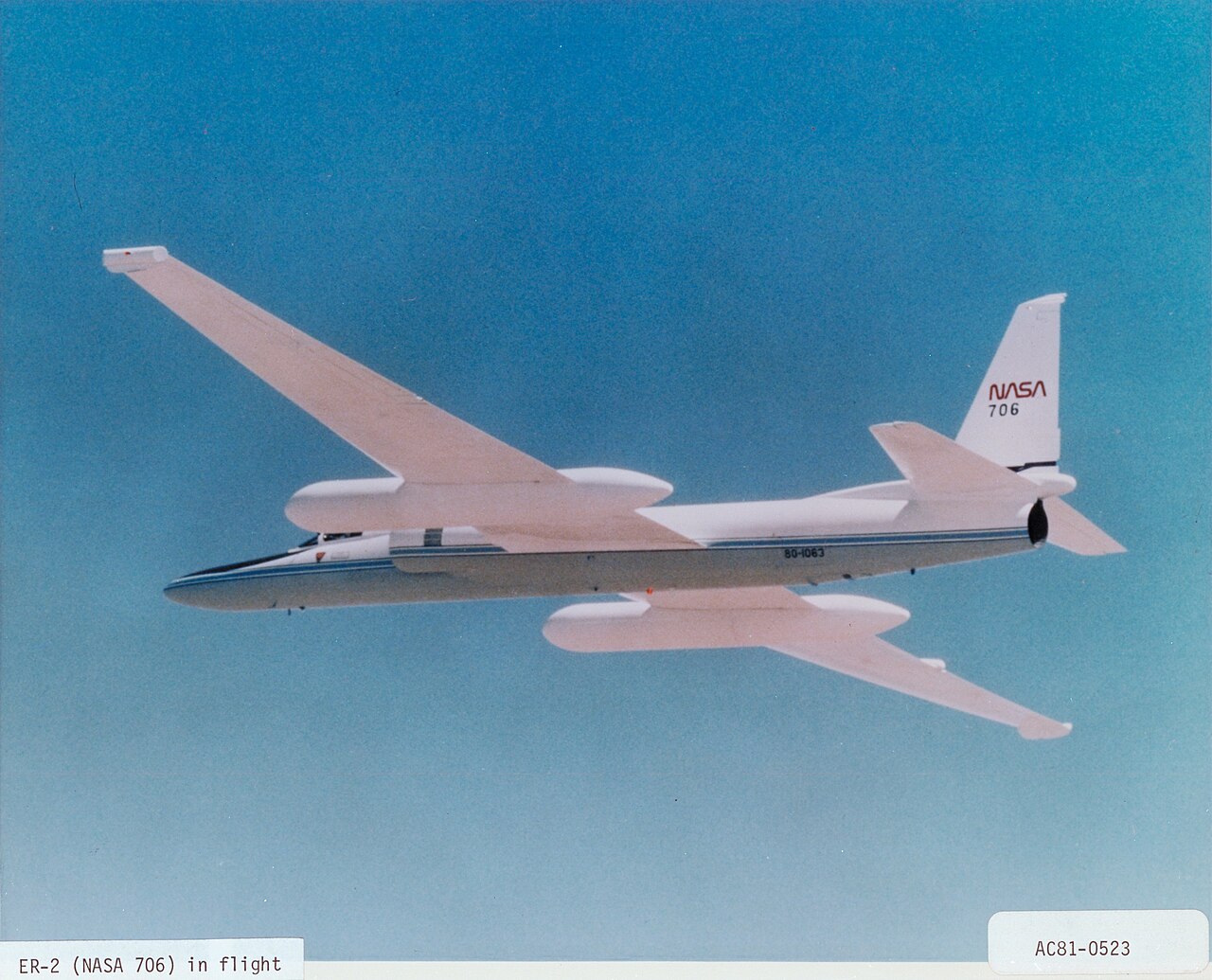
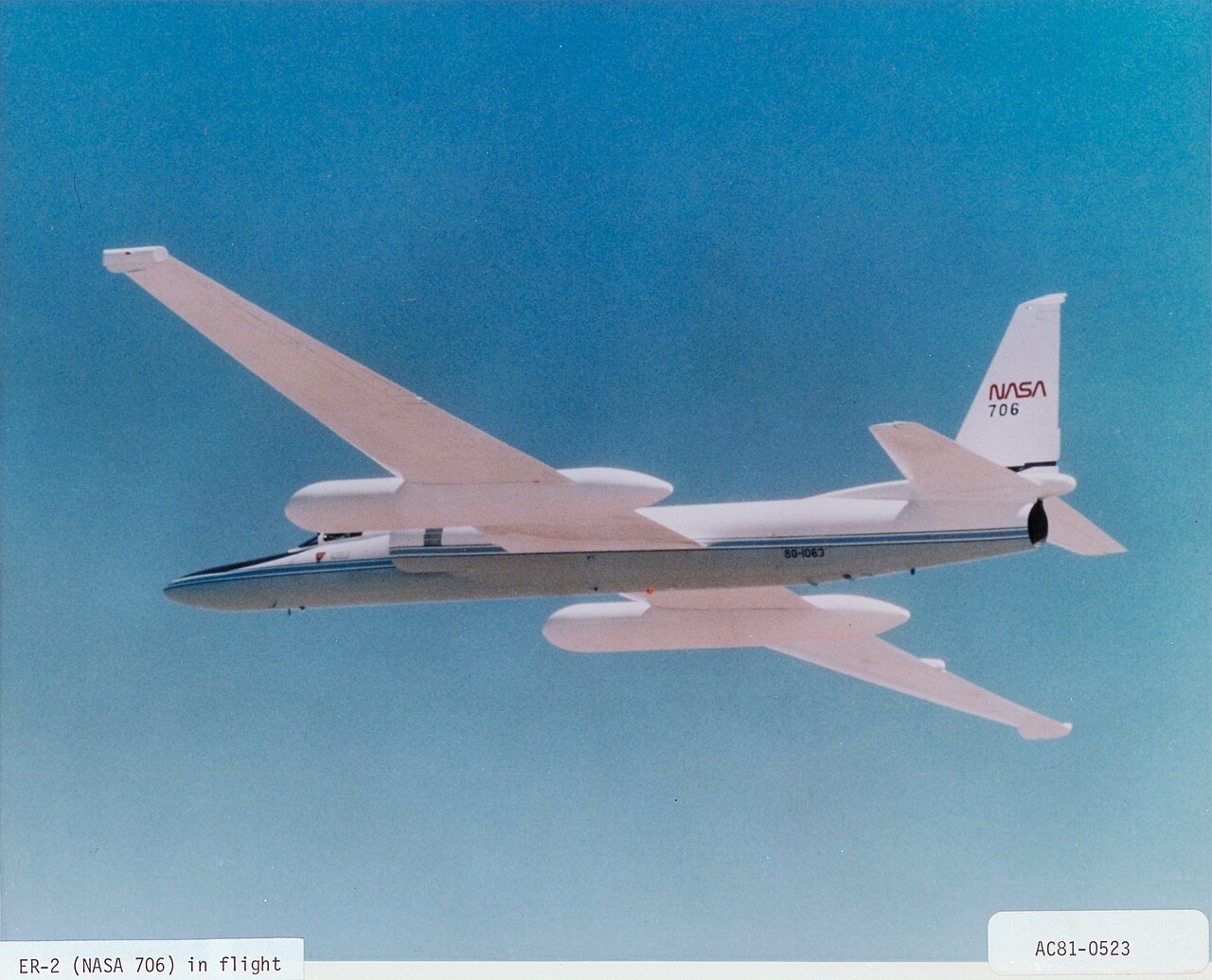
At 65,000 feet, where the sky fades into a deep cobalt blue and the Earth's curvature becomes a sharp horizon, the NASA ER-2 operates in an environment hostile to any other civilian aircraft. It is not just an airplane; it is a bridge between Earth and space, a cryogenic laboratory capable of sampling the atmosphere where human life could not survive without pressurized life support.
✈️ Scheda Tecnica & Prestazioni
History, Origins and Design Philosophy
The ER-2 was born from the legendary Lockheed U-2 airframe, designed by Kelly Johnson and his 'Skunk Works'. Originally conceived for strategic reconnaissance, the ER-2 version was optimized for scientific research. The philosophy remains unchanged: a motorized glider with an extremely low wing loading, capable of sustained flight at altitudes where the air is so thin that the stall speed and the VNE (Velocity Never Exceed) converge in a narrow operating margin known as the 'coffin corner'.
Aeronautical Engineering, Engines and Aerodynamics
The heart is the F118-GE-101 turbofan, replacing the older J75 engines. This unit provides the thrust required to maintain level flight at FL650. The aerodynamics are characterized by extreme wingspan, necessary for lift in thin air, making landing a challenge of absolute precision, supported by a bicycle landing gear and 'pogos' that drop away after takeoff.
Cockpit Life: Operational Procedures and Pilots
The pilot operates while wearing a full-pressure suit, similar to those worn by astronauts. Managing the aircraft requires total concentration: the control system is purely analog and requires constant input. Fuel management and monitoring engine vital signs are absolute priorities in a cockpit where every movement is restricted by the bulk of the suit.
Real Missions and Operational Challenges
From ozone study campaigns over Antarctica to satellite calibration missions, the ER-2 crosses national borders. The operational challenge lies in logistics: operating from remote bases requires a dedicated ground support team capable of managing the delicate maintenance operations of an airframe that works constantly at its structural limits.
| Technical Feature | Official Data |
|---|---|
| Wingspan | 31.4 m |
| Length | 19.2 m |
| MTOW | 18,144 kg |
| Crew | 1 |
The legacy of the ER-2 is invaluable. As drone technology advances, the ability of a human pilot to interpret data in real-time and adapt the mission in-flight remains irreplaceable, ensuring the ER-2 a place in the skies for decades to come.